You survived the sledgehammers, the blue tape, and the army of contractors. Your dream renovation is finally complete, but as the builders pack up, a ghostly white powder covers every single square inch of your home. Normal tidying will not cut it here. Drywall grit behaves differently than regular dirt, hitching a ride inside your vents and settling deep into your window tracks. Before you grab a standard broom and accidentally blow it all back into the air, let us look at how professionals tackle this mess to give you a pristine living space.
Let the Air Settle Completely Before Starting
Patience is your absolute best tool when a major remodel wraps up. The moment the crew leaves, the air inside your home remains heavily saturated with microscopic debris. Rushing in immediately with a cloth or a broom means you will just chase your tail. The tiniest movement stirs the particles right back up, forcing you to reclean the exact same tabletop a few hours later.
Give the house a solid twenty-four hours to breathe so gravity can do the heavy lifting for you. Once those floating particles finally land on the floors and countertops, you have a stationary target. Waiting out the storm ensures you actually remove the debris instead of just redistributing it around the room. Lock the doors, turn off the ceiling fans, and let the house fall completely still.
Use a HEPA-shielded Shop Vacuum to Capture Micro-particles
Your everyday household vacuum cleaner is simply not built for this kind of battlefield. Standard vacuums feature porous bags and basic filters that allow ultra-fine drywall particles to blast straight out of the exhaust and right back into your living room. Worse, the abrasive powder bypasses the filtration system entirely, quickly burning out the motor of your expensive appliance.
An industrial shop vacuum equipped with a genuine HEPA filter is needed to handle a tough post construction cleaning project. These high-efficiency filters trap the microscopic silica and plaster fragments that normal vacuums miss. The heavy-duty suction pulls the grit deep into a completely sealed canister, keeping your indoor air breathable while you work. Remember to empty the canister frequently outside so the machine maintains peak suction.
Wipe Surfaces from Top to Bottom Using Microfiber Cloths
Gravity governs this entire process, which means you must always work from the ceiling down to the floor. If you start by wiping the baseboards and then move up to the ceiling fans, you will rain fresh debris down onto your freshly cleaned surfaces. Professionals always follow a strict top-down layout, beginning with recessed lighting fixtures, crown molding, and upper cabinet shelves.
Ditch the paper towels and cotton rags for this stage of the deep clean. Microfiber cloths feature thousands of tiny, split fibers that create a slight static charge, acting like a magnet for fine debris. Instead of pushing the powder around, these cloths trap the grit within their weave until you rinse them out. Keep a bucket of clean water nearby and switch out the water the moment it starts looking cloudy.
Vacuum Walls and Ceilings with a Soft Brush Attachment
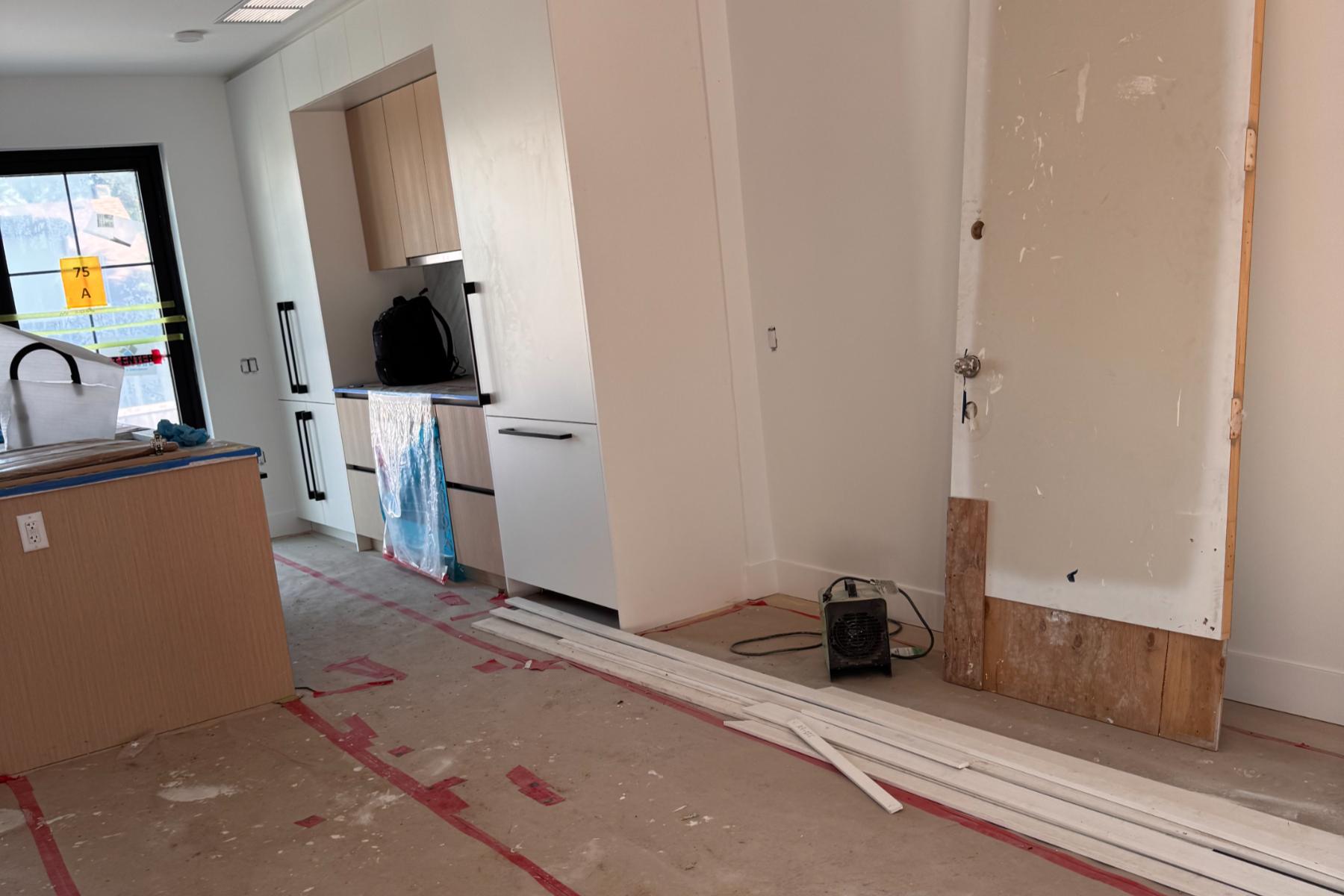
People often forget that vertical surfaces hold an incredible amount of debris. Drywall sanding creates a static charge that makes fine powder cling directly to the texture of your walls and ceilings. If you skip this step and go straight to rolling on a fresh coat of paint or hanging artwork, you will permanently trap the grit.
Attach a wide, soft-bristle brush to your vacuum extension wand to glide safely over the drywall. The bristles gently agitate the stuck particles without scratching your paint, while the suction instantly swallows the dislodged debris. Work in methodical, overlapping vertical strokes from the ceiling down to the baseboards. You will be amazed at how much brighter the paint looks once you remove that dull, chalky film.
Mop Floors at Least Twice with a Damp Microfiber Flat Mop
When it comes to renovated floors, a single pass with a traditional string mop will not cut it. String mops tend to puddle dirty water into the grout lines, creating a cloudy residue once the surface dries. Instead, rely on a flat microfiber mop system to lift the final layer of film. The flat profile applies even pressure across the floor, lifting the microscopic film that vacuums leave behind.
Your first mopping pass should focus purely on breaking the bond between the stubborn dust and the floor substrate. Use a specialized neutral cleaner and a damp—never soaking wet—mop pad to collect the bulk of the residue. Immediately follow up with a second pass using a completely fresh pad and clean water to eliminate any remaining streaks. For hardwood and tile, this double-mop strategy is the only way to restore the original shine.
Clean the Windows, Tracks, and Frames Where Dust Hides
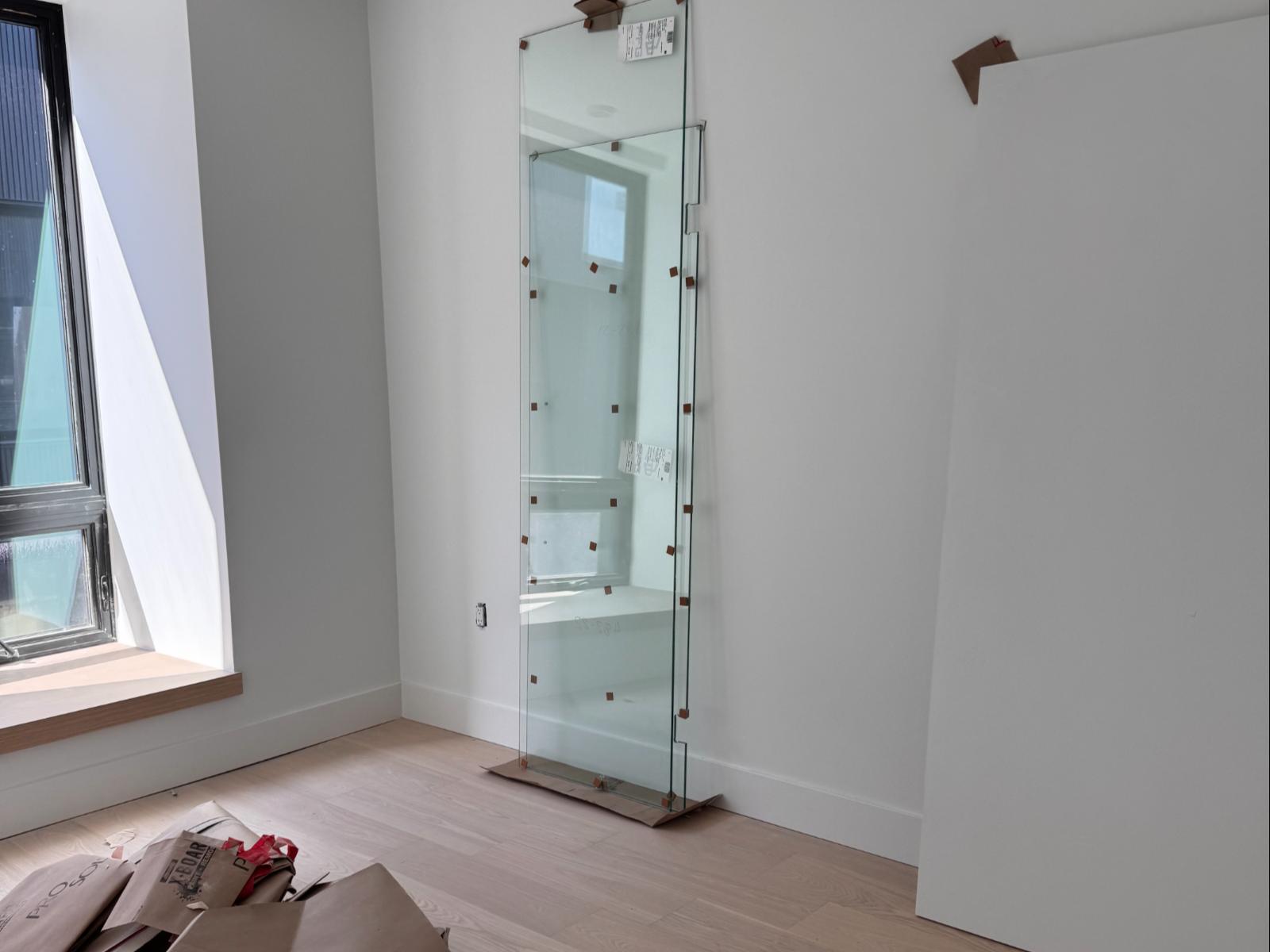
Windows are notorious traps for remodeling debris. The static electricity on the glass draws the fine powder, while the oily residue from manufacturing leaves a sticky film that holds onto the grit. Furthermore, the vinyl or wooden tracks at the bottom of the window frame act as a gutter, collecting everything that drifts down the pane.
Open the windows fully and use a crevice tool to suck the heavy buildup out of the tracks before applying any liquids. Once the loose debris is gone, spray the frames and glass with a streak-free cleaner, wiping it down with a fresh cloth. Pay special attention to the window sills and the top lips of the frames, where hidden powder loves to settle. Getting these spots clean brightens the entire room instantly.
Run Industrial Air Scrubbers Throughout the Entire Process
Even with meticulous wiping and vacuuming, the physical act of cleaning inevitably stirs up the smallest, lightest particles. These micro-particles can remain suspended in the air for hours, waiting to settle back onto your clean tables the moment you sit down to relax. To break this frustrating cycle, professional teams deploy portable air scrubbers to clean the atmosphere while they work on the ground.
These heavy-duty machines continuously draw in the ambient room air, force it through multi-stage filtration systems, and exhaust clean air back into the space. By creating a continuous cycle of air exchange, the machine captures the airborne particles before they ever get a chance to land. Keeping a scrubber running throughout the project ensures that your hard work actually sticks, leaving the home completely fresh.
Trust the Certified Experts at PCC Cleaning Services to Reclaim Your Beautifully Renovated Home
You have poured an incredible amount of time, energy, and money into transforming your property, and you deserve to enjoy the final results without the exhausting cleanup. Trying to tackle industrial-grade renovation debris on your own can quickly turn your exciting milestone into a stressful chore. Our highly trained team brings the heavy-duty machinery, the advanced HEPA filtration, and the specialized techniques required to eliminate every trace of grit safely and efficiently.
Let us handle the heavy lifting so you can finally relax and celebrate your brand-new space with absolute peace of mind. We customize our post construction cleaning process to fit the exact layout of your project, ensuring that absolutely no hidden corner or air vent gets overlooked. Do not let airborne debris compromise your indoor air quality or ruin your beautiful new finishes. Contact us today to schedule your comprehensive walkthrough and let our professionals make your home shine exactly the way it was meant to.
FAQs:
How Does PCC Cleaning Services Ensure the New Walls and Ceilings Aren’t Scratched During the Process?
We treat your brand-new finishes with absolute care. To clean vertical surfaces and ceilings, our technicians use wide, exceptionally soft brush attachments on our vacuum extension wands. This allows us to gently lift the statically charged powder off your fresh paint or wallpaper without scraping, rubbing, or leaving marks on the surface.
Will the Post-construction Cleanup Eliminate the White Haze on My Tile or Hardwood Floors?
Yes, that stubborn white haze is exactly what we specialize in removing. Traditional mopping just spreads the drywall film around and settles it into your grout lines. Our team uses a double-pass method with specialized neutral cleaners and flat microfiber mop pads. The first pass breaks the physical bond of the powder, and the second pass lifts away the remaining film to restore your floor’s true shine.
Do You Clean Inside the Heating and Cooling Vents?
Absolutely. Remodeling debris naturally gets pulled into your ductwork, which can ruin your indoor air quality the moment you turn on the air conditioner. We remove the vent covers and grilles to wash them down by hand, vacuum out the reachable areas of your ducts with high-suction hoses, and replace your clogged HVAC filters to keep your air clean and protect your system.
Why Do You Use Air Scrubbers If You Are Already Vacuuming and Wiping Down Surfaces?
Even the most careful cleaning stirs up a tiny amount of microscopic powder. Industrial air scrubbers act as a continuous safety net, pulling the ambient air through multi-stage filters while our crew works on the ground. This setup traps floating particles before they have a chance to land on your newly wiped tables, ensuring the room is genuinely clean from floor to ceiling.