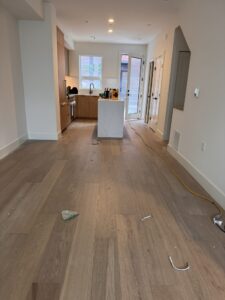
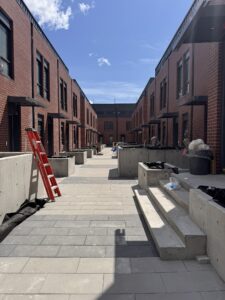
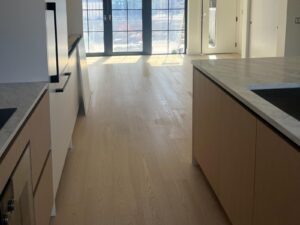
Vancouver’s rainy season changes the final construction clean in ways most people don’t expect. From November through March, our in house team sees the same pattern on job sites across the Lower Mainland: more water and grit carried into the building, damp air that makes dust harder to remove, and cleaned surfaces that take much longer to dry. Rain tracked in by trades reaches new hardwood and tile within hours, condensation forms on new windows every cold morning, and shorter days make it harder to spot residue on finished surfaces. None of this means a winter handover has to look any less polished than a summer one. It simply calls for a dry first cleaning sequence, careful moisture control and a final inspection under strong lighting. When the clean is scheduled after the last wet trades, the crew can focus on the finished surfaces and flag any areas that need more drying time before the buyer or owner walks through. Here is what changes in the wet months, and how we plan for it.
What Rain and Mud Do to New Floors
Mud and grit carried in on wet boots can scratch new hardwood, mark tile and soil carpet before the building is ready for handover. The risk is highest at entrances and along the routes between the entry, the work areas and the parkade, where wet soles pick up debris and spread it across clean surfaces. Our crews set up entry mats and boot cover stations to cut down on the dirt tracked into finished areas, and we ask the general contractor to keep trades on the same routes during the final days. When floor protection comes up, we remove it slowly and carefully so trapped grit is not dragged across the surface. Damp cardboard and coverings can also hold moisture against floors for days, so we check every exposed finish for damp patches before we start cleaning it. The order of work matters just as much. We HEPA vacuum dust and loose grit before any wet cleaning, which keeps debris from turning into a muddy film. On carpet, that dry removal lifts tracked in particles, and on hardwood and tile it reduces the chance of grit being pushed across the finish during detailing.
These are the wet weather problems we check for on every winter handover:
- Tracked in grit: fine scratches and dull paths on new hardwood and tile
- Damp protection: moisture trapped under cardboard or floor film
- Smeared dust: drywall dust that turns to paste when humid
- Window condensation: streaks and residue on glass and in tracks
- Slow drying: floors and grout that look clean but are still damp
- Entry and parkade dirt: mud carried in from wet exterior areas
Why Humidity Makes Dust and Windows Harder
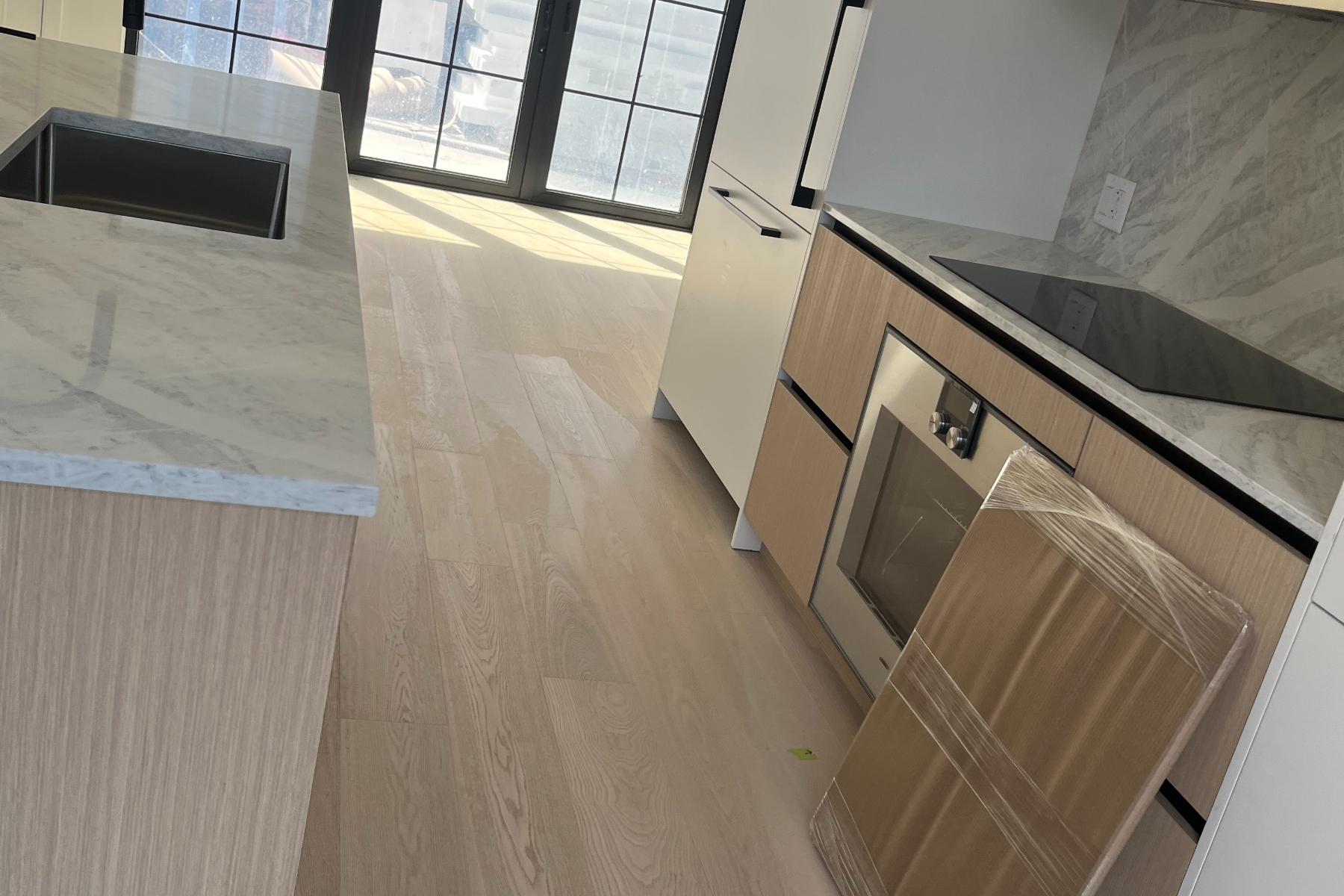
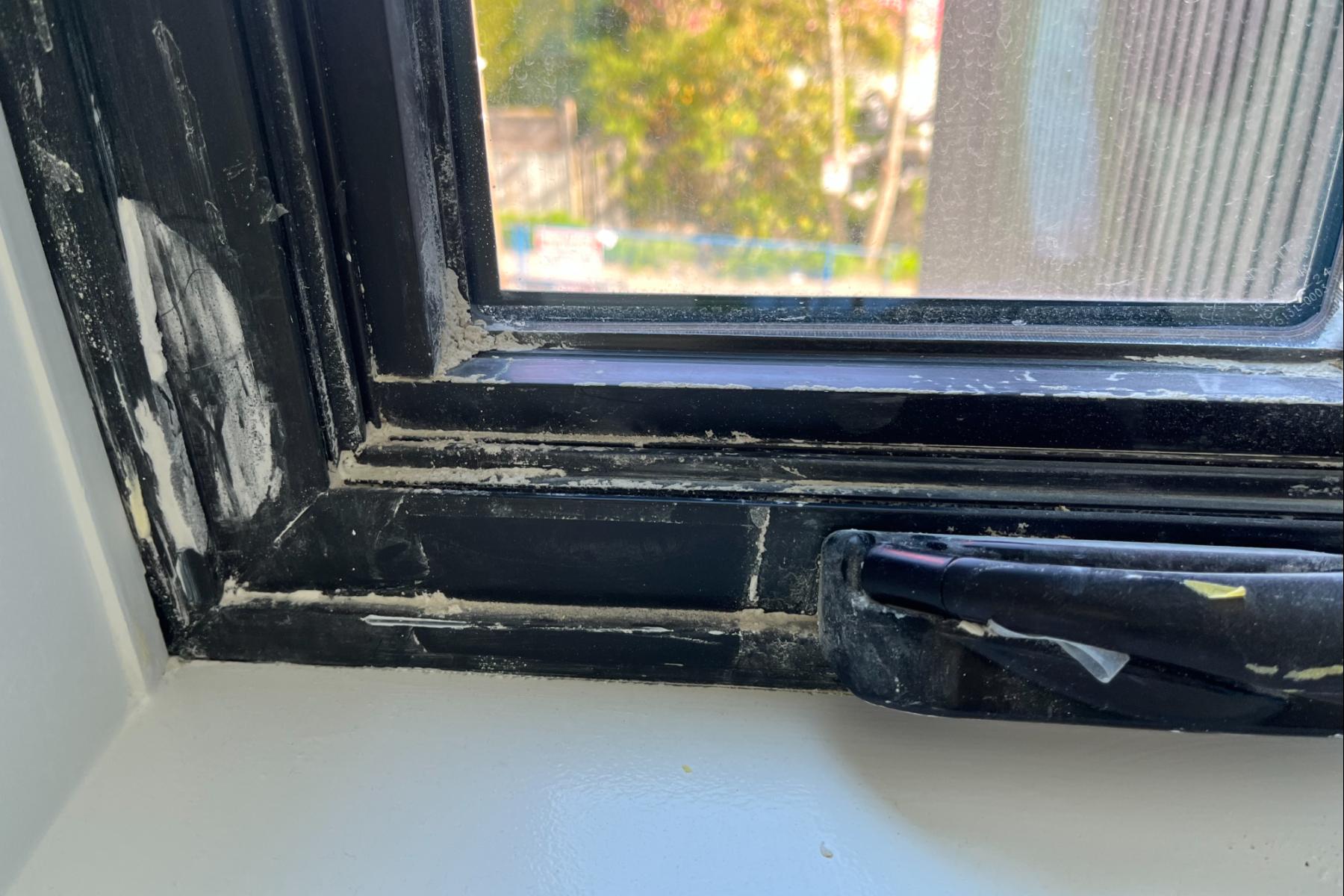
Humid air makes drywall dust more likely to clump or smear, and condensation on new windows can leave streaks and residue on the glass and in the tracks. That combination makes dry dust removal and careful window detailing two of the most important parts of a rainy season clean. Our team always HEPA vacuums before wet cleaning, so loose dust is removed before moisture reaches it, because once damp dust sticks to a surface, wiping it can spread a thin film and create more work. Our post on why HEPA filtration matters in post construction cleanup explains why this step is so important. Windows need extra attention in winter because condensation collects along the glass and inside the tracks, carrying fine dust with it as it runs. The crew details those areas and checks for streaks once the glass is dry enough to show the true result. Shorter daylight hours also make finish checks harder, so we inspect with work lights that reveal marks and residue that dim winter light can hide.
How We Plan a Winter Final Clean
Damp protection and slow drying can leave moisture against floors or stretch the time needed for freshly cleaned floors and grout to dry, so we plan around both. When floor protection comes off, any damp patches underneath get attention before the finish is cleaned and inspected. If the building has dehumidifiers or permanent heat running, we use those conditions to help surfaces dry before final detailing, and the crew checks each area before moving on rather than working to a fixed clock. Wet cleaned floors and grout need time to dry before an inspection can show their true finished appearance, which is why we build that time into the schedule instead of rushing the last room. Scheduling the clean after the last wet trades limits fresh moisture and dirt coming into cleaned areas. We then inspect every finish under work lights, paying close attention to entries, parkades, window tracks and anywhere protection covered the floor.
Builders who plan for the weather get a winter handover that looks every bit as sharp as a summer one. On multi unit projects like our Brickwater development, an 80 unit condo building by Falcon Homes, a clear wet weather plan keeps every unit consistent no matter what the sky is doing. Small steps like boot cover stations, careful removal of damp protection and an extra day for drying make a real difference. Talking through the plan with your cleaning team before the final week saves stress and avoids return visits.
If you are finishing a build or renovation this winter, our full time, in house team can help you hand it over clean, dry and ready to impress. Learn more about our post construction cleaning and book your final clean before the next storm rolls in.